Rather than relying on literal symbols or stylistic imitation, we focus on atmosphere, spatial rhythm, proportion, and emotional resonance.
Design luminary Joe Cheng founded CCD/Cheng Chung Design in Hong Kong in 1994. Since then, the studio has undergone rapid growth, establishing offices in Beijing, Shanghai, Singapore, Tokyo, Dubai, Melbourne, London, and beyond. Last year, CCD relocated to a rooftop duplex in Wan Chai, a key milestone in its broader Asian expansion strategy following the launch of its Tokyo office in June.

Congratulations on your new Hong Kong office. What are some of the most special features? And why now?
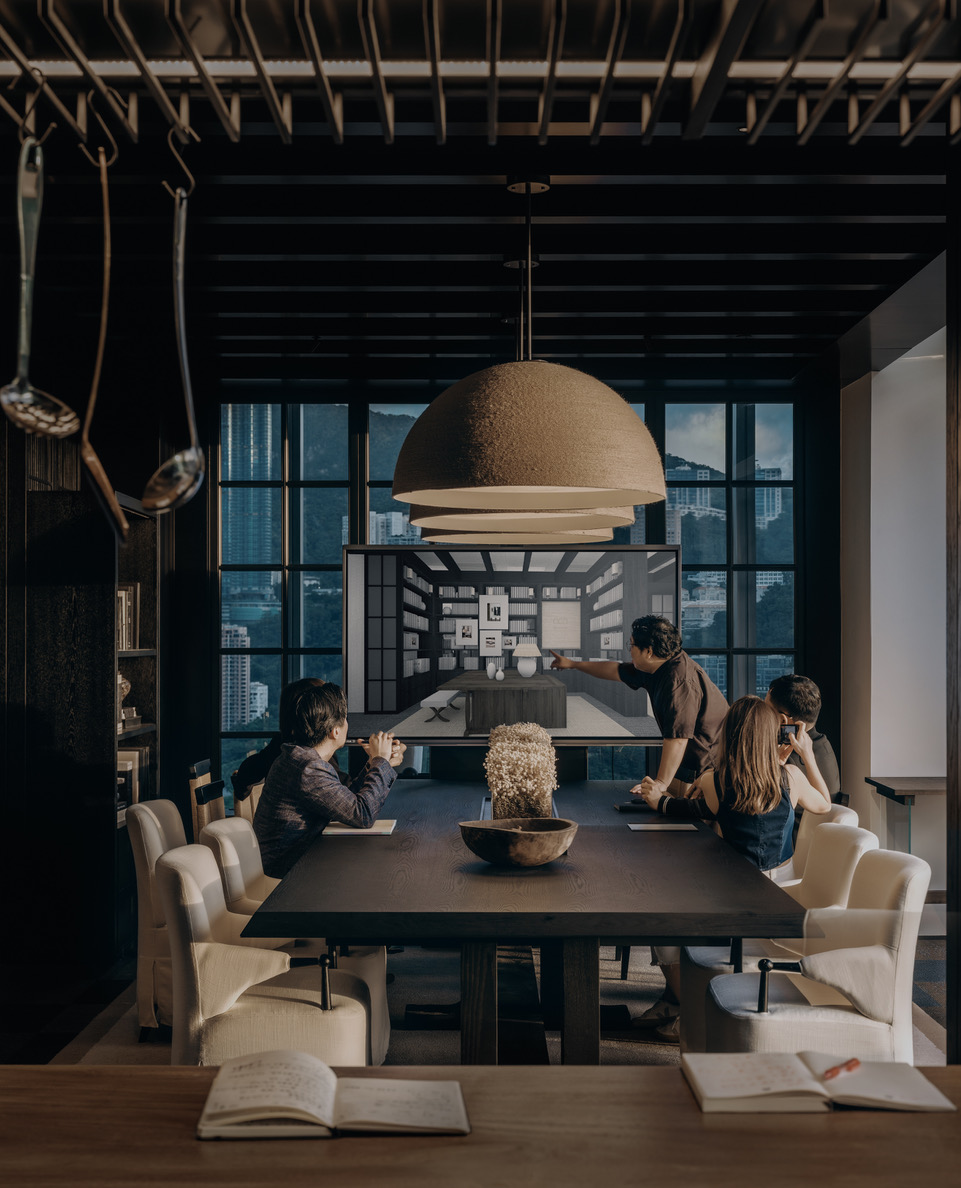
One of the most distinctive features of our Hong Kong office is that it is conceived not merely as a workplace, but as a cultural “library” — a space that carries time, memory, and passion for design.
Hong Kong itself is a city where East and West, tradition and modernity, constantly coexist. Establishing our office here, in Wan Chai, allows us to anchor CCD more firmly within the Asia-Pacific region while remaining deeply connected to global design dialogues. The location is highly symbolic: surrounded by government institutions, international organizations, Victoria Harbour, and the historic Happy Valley Racecourse, it reflects both efficiency and cultural depth.
The timing is equally important. As CCD continues to expand its international portfolio, particularly across Asia, we felt it was essential to create a space that could respond more sensitively to cross-cultural collaboration. This office embodies our belief that design is not bound by geography — it evolves through dialogue, continuity, and long-term vision.

I see there are a lot of equestrian elements throughout the office. Any interesting stories behind you and equestrian?
The equestrian elements are deeply rooted in both the local context of Hong Kong and our design philosophy.
Overlooking the Happy Valley Racecourse — the birthplace of Hong Kong’s horse racing culture — the office naturally engages with the spirit of equestrianism: speed, discipline, elegance, and respect for tradition. For us, the horse is not simply a decorative motif, but a symbolic presence.
I have always believed that the character of the horse represents an ideal state of design — grounded in reality yet striving beyond the mundane. In Hong Kong’s racing culture, the red and black ribbon awarded to the winning horse carries meanings of fortune, honor, and leadership. We reinterpreted this symbol within the office’s art installations as a quiet tribute to perseverance, belief, and the pursuit of excellence. Through these equestrian references, we aim to translate local cultural memory into a contemporary spatial language — one that connects people, city, and time.

I’ve learnt that you have a long list of hotel projects throughout Asia. Could you name one or two that are most dear to you?
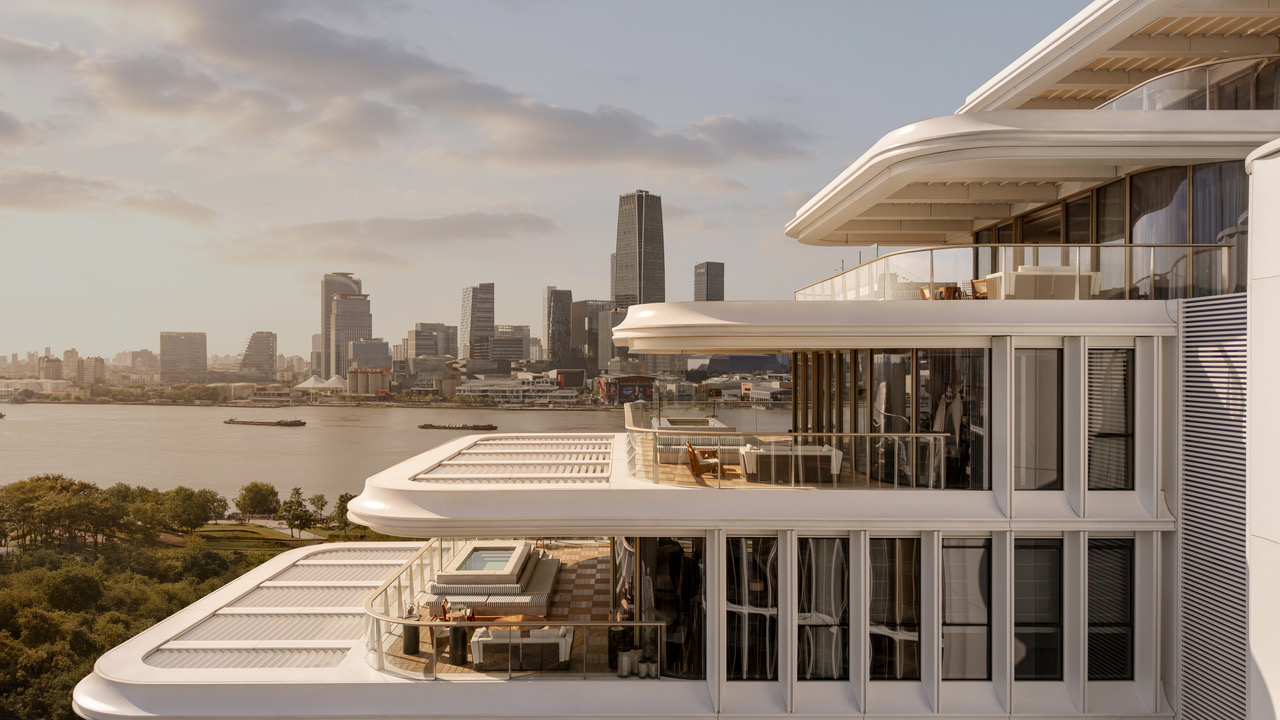
Mandarin Oriental Qianmen, Beijing and Waldorf Astoria Shanghai Qiantan.

Whats the key to achieving an East-meets-West aesthetic?
For me, the key to achieving an East-meets-West aesthetic lies not in simply combining visual elements, but in translating cultural spirit. At CCD, we are deeply rooted in Eastern philosophy and cultural sensibility, yet we choose to express these ideas through a contemporary, international design language. Rather than relying on literal symbols or stylistic imitation, we focus on atmosphere, spatial rhythm, proportion, and emotional resonance. This allows Eastern values — such as balance, restraint, and a sense of harmony with nature — to be understood intuitively, even by a global audience.
“East-meets-West” is therefore not a fixed style, but an evolving methodology. It requires sensitivity to local culture, openness to global perspectives, and the discipline to continually refine how ideas are expressed across different contexts and markets.

What’s next for your company?
Looking ahead, CCD will continue to deepen its international presence while remaining committed to long-term creativity and cultural confidence. With offices in Hong Kong, Singapore, London, Tokyo, and Dubai, CCD brings together a multicultural team whose global perspective and cross-disciplinary expertise enable meaningful dialogue across regions and cultures.
We see international expansion not simply as geographic growth, but as a second stage of entrepreneurship — one that allows us to engage more deeply with different cultures, industries, and modes of collaboration. Alongside this, we are investing in technology and integrated design systems to improve efficiency, sustainability, and the overall quality of spatial experience. Ultimately, our goal is to build a global platform driven by creativity and supported by technology — one that enables Chinese design to engage in meaningful dialogue with the world, and to create spaces that carry lasting cultural and human value.