


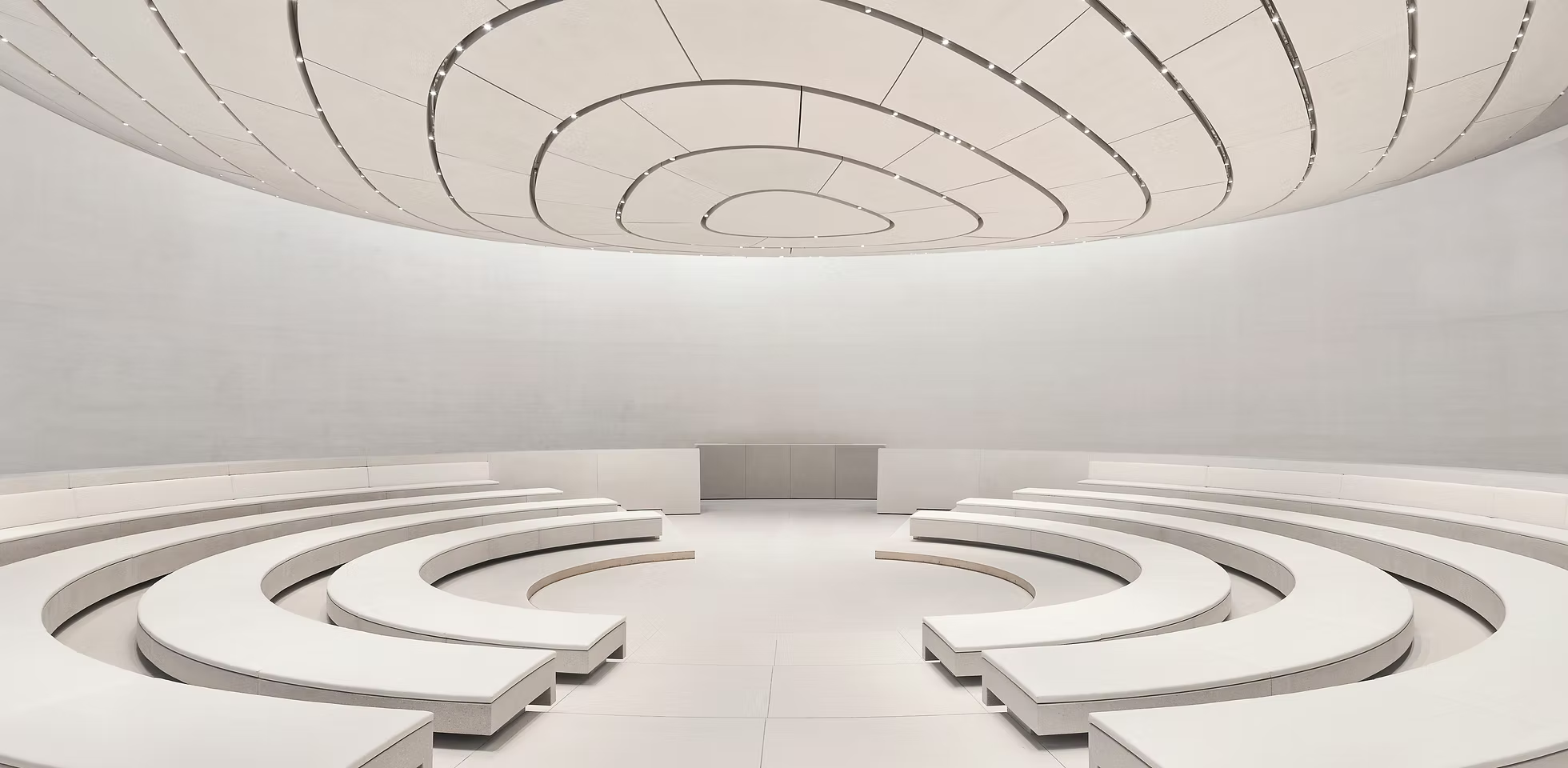
Prix Versailles just unveiled its 2026 shortlist of the worlds most stunning museums—and only one is in Europe.
This years architectural showcase spans four continents, celebrating seven museums where the buildings themselves rival the collections inside. From Norman Fosters falcon-inspired towers to Kengo Kumas narrative-driven spaces, here are the seven museums redefining cultural architecture.
1. Zayed National Museum, Abu Dhabi
Architect: Norman Foster / Foster + Partners

Fosters long-awaited masterpiece finally opened on the UAEs 54th anniversary, anchoring Abu Dhabis Saadiyat Cultural District. Five aerodynamic steel wings rise like falcons taking flight—a nod to the UAEs national emblem—while functioning as thermal chimneys that naturally cool the public spaces. The museum charts the Emirates journey from early settlement to modern nation, with the architecture itself embodying Sheikh Zayeds vision of greening the desert.
2. Science & Technology Museum, Shenzhen
Architect: Zaha Hadid Architects

The late Zaha Hadids signature organic, flowing forms continue to captivate in this Shenzhen landmark. True to the firms DNA, the building delivers futuristic curves that blur the line between structure and sculpture.
3. MoN Takanawa: The Museum of Narratives, Tokyo
Architect: Kengo Kuma

Kengo Kuma scales the museum down to a sequence of intimate rooms, using timber, stone and soft screens to make architecture feel like a readable narrative. Each “chapter” unfolds through framed views and multimedia, blurring the line between exhibition, house and city.
4. Xuelei Fragrance Museum, Guangzhou
Architect: Shenzhen Huahui Design

Chinas second entry on the list, this Guangzhou museum showcases how emerging design firms are pushing boundaries in cultural architecture. The fragrance museum translates scent into space, with curved walls, diffused light and layered pathways echoing how aroma lingers and drifts. Interactive installations and an AI blending lab lead visitors from raw botanicals to bespoke perfumes.
5. National Medal of Honor Museum, Arlington
Architect: Rafael Viñoly

Rafael Viñoly composes a grounded plinth and hovering volume to express both gravity and suspension, befitting the US’s highest military honour. Carefully modulated light and immersive media shift the focus from abstract heroism to individual stories.
6. Islamic Civilization Center, Tashkent
Architect: Shavkat Mirziyoyev

This new center reframes domes, arcades and courtyards in crisp contemporary geometries, setting Islamic architectural archetypes within glass, water and shadow. Galleries pair rare manuscripts and artefacts with digital interpretation to spotlight Central Asia’s role in Islamic history.
7. Lost Shtetl Museum, Šeduva, Lithuania
Architect: Rainer Mahlamäki / Lahdelma & Mahlamäki Architects

Europes sole representative is a stunner. The Finnish architect behind Warsaws acclaimed POLIN Museum created this 3,400-square-meter structure that evokes a vanished Jewish townscape. The buildings silhouette recreates traditional shtetl rooftops, with a synagogue roof as the centerpiece. Its anodized aluminum shingles catch and reflect light, making the museum appear to vanish and reappear with shifting weather—a poetic metaphor for the lost communities it commemorates. Inside, exhibitions are organized into “individual houses,” each telling a distinct chapter of Jewish life in Lithuanias small towns.
Three of these seven will receive additional World Title distinctions—Prix Versailles, Interior, or Exterior—announced later this year. According to Jérôme Gouadain, Secretary General of Prix Versailles, this years selection stands out for “architectural interpretations and staging” that give these spaces “extraordinary narrative power”.


