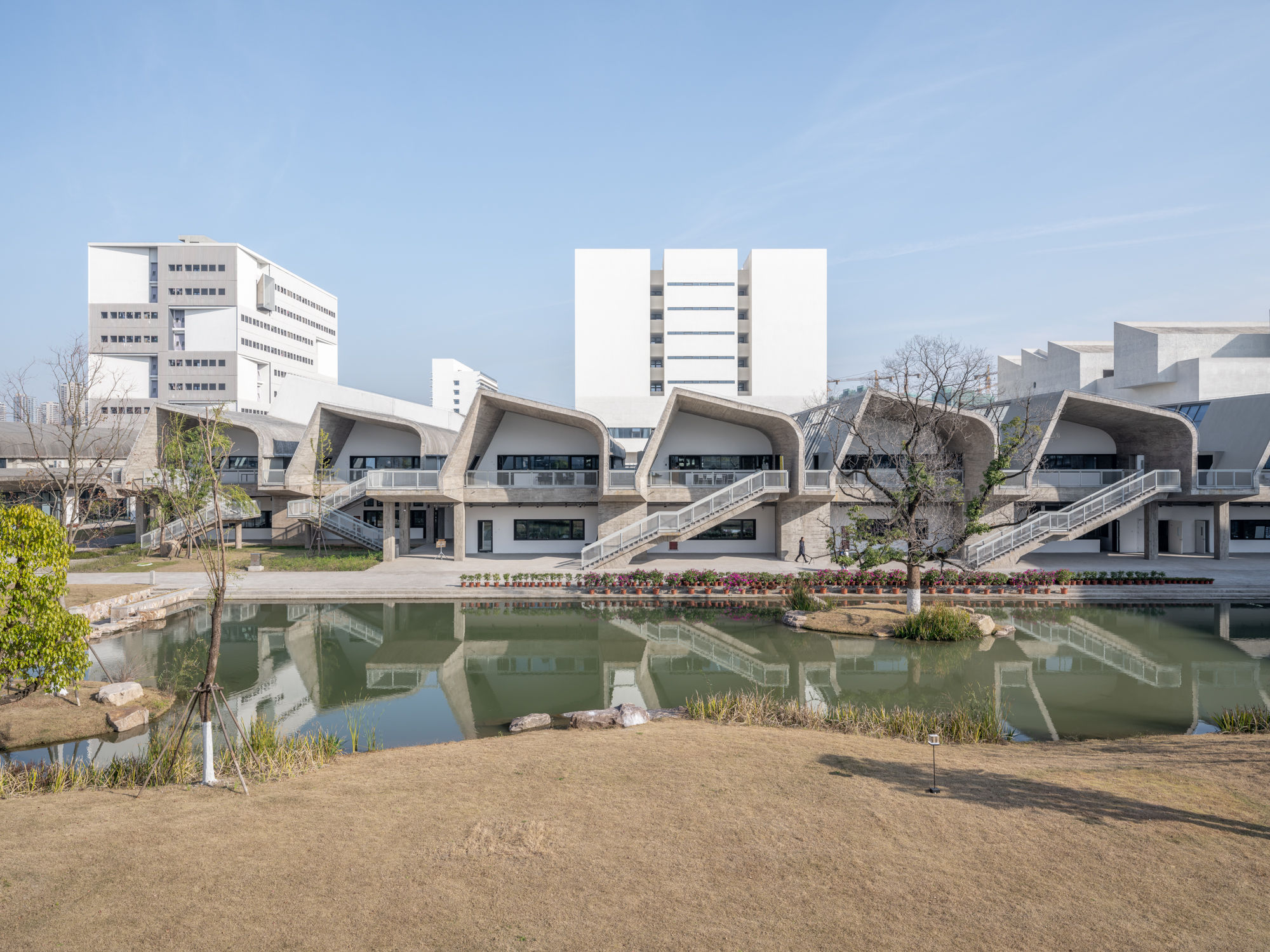
In Taizhou’s Jiaojiang District, Zhejiang, Taizhou Contemporary Art Museum pairs a rugged material presence with a finely considered approach to space.
Designed by Atelier Deshaus, Taizhou Contemporary Art Museum stands within the Shamen Granary cultural and creative district. Once an important grain-storage hub, the industrial site retains an extensive collection of Soviet-style buildings. As urban regeneration reshapes the area, restoration and adaptive reuse are giving these former working spaces a new cultural purpose.


At first glance, the museum seems to rise from the earth, its rough surfaces offset by the precision of its spatial composition. Cast-in-place concrete gives the building a weight and solidity that recall the site’s industrial past while asserting a distinctly contemporary presence. Parallel barrel vaults define the galleries, lending them a measured, almost monumental rhythm while drawing light into the exhibition spaces.

The route through the museum is equally considered. It begins in a gallery facing the plaza, where the vaults extend towards the square to connect the building with its public setting. As the galleries turn and rise through successive levels, the vaults shift direction with them. At the top, the building opens out once more, this time towards the distant mountains. Structure and landscape come into alignment, while changes in light, shadow and scale give each stage of the ascent a distinct character.


Light is central to the interior experience. The vaulted ceilings modulate daylight, which works alongside artificial lighting to establish a changing rhythm throughout the galleries. The interplay brings the artworks into focus while creating an atmosphere that feels both contemplative and dynamic—a journey shaped as much by light and shadow as by the spaces themselves.

More than an exhibition venue, Taizhou Contemporary Art Museum explores how a city’s industrial memory can inform its cultural future. It brings contemporary art into a former working landscape, acknowledging the past without being bound by it. As a new landmark for Taizhou, the museum offers an approach to contemporary Chinese architecture that is rooted in its setting yet engaged with a wider architectural conversation, showing how a new cultural identity can emerge from the fabric of an old industrial site.
Photo courtesy of Fangfang Tian