


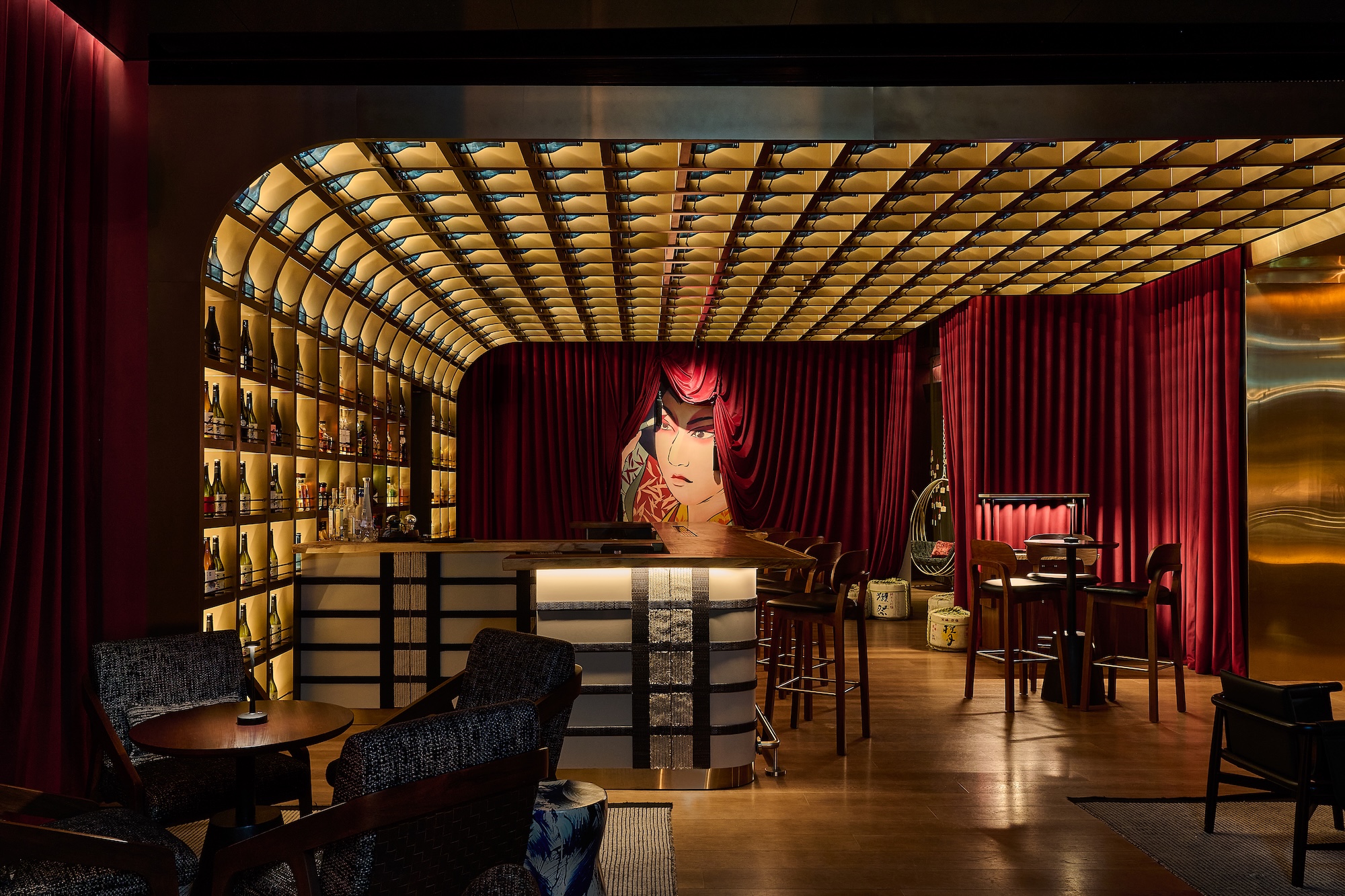
At Mandarin Oriental Jumeira, Dubai, Netsu Bar draws on the drama of Japanese Kabuki performance—and a bold mural collaboration with New Zealander artist Enforce One—to transform the former lobby lounge into a moody prelude to dinner.
Designed by LW Design, the project transforms the former Lobby Lounge and Library into a dedicated arrival sequence for Netsu, the restaurant celebrated for its “Theatre of Fire.” In place of a conventional lounge setting, the space is conceived as a prelude—an atmospheric threshold that heightens anticipation before guests step into the drama of the main dining room.
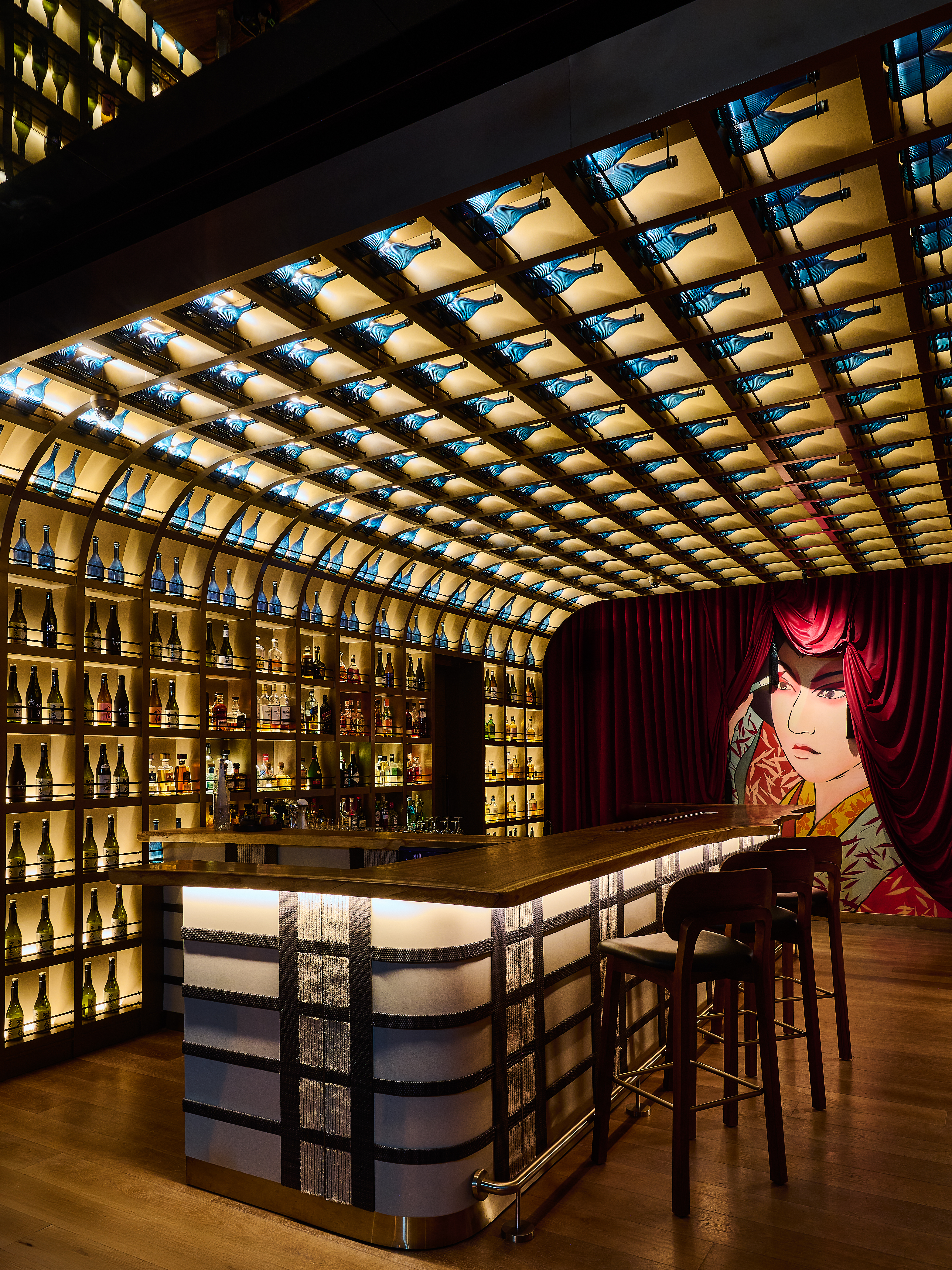
What gives the project its distinct identity is its conceptual link to Japanese Kabuki performance. Rather than borrowing from theatre in a purely visual sense, the design translates Kabuki’s sense of ceremony, rhythm and staged reveal into a spatial journey. The experience begins in the bright openness of the hotel lobby before moving into a more intimate, dimly lit setting, where the shift in light and mood signals that something more immersive is about to unfold.
At the centre of the room is a bar that behaves less like a static fixture and more like a performative gesture. Rising along the wall and sweeping across the ceiling in a luminous arc, it draws the eye upward and sets the visual rhythm of the interior. This sculptural move gives the room a sense of motion and drama, reinforcing the idea that the bar is not simply a place to pause, but part of the wider theatrical narrative surrounding Netsu.
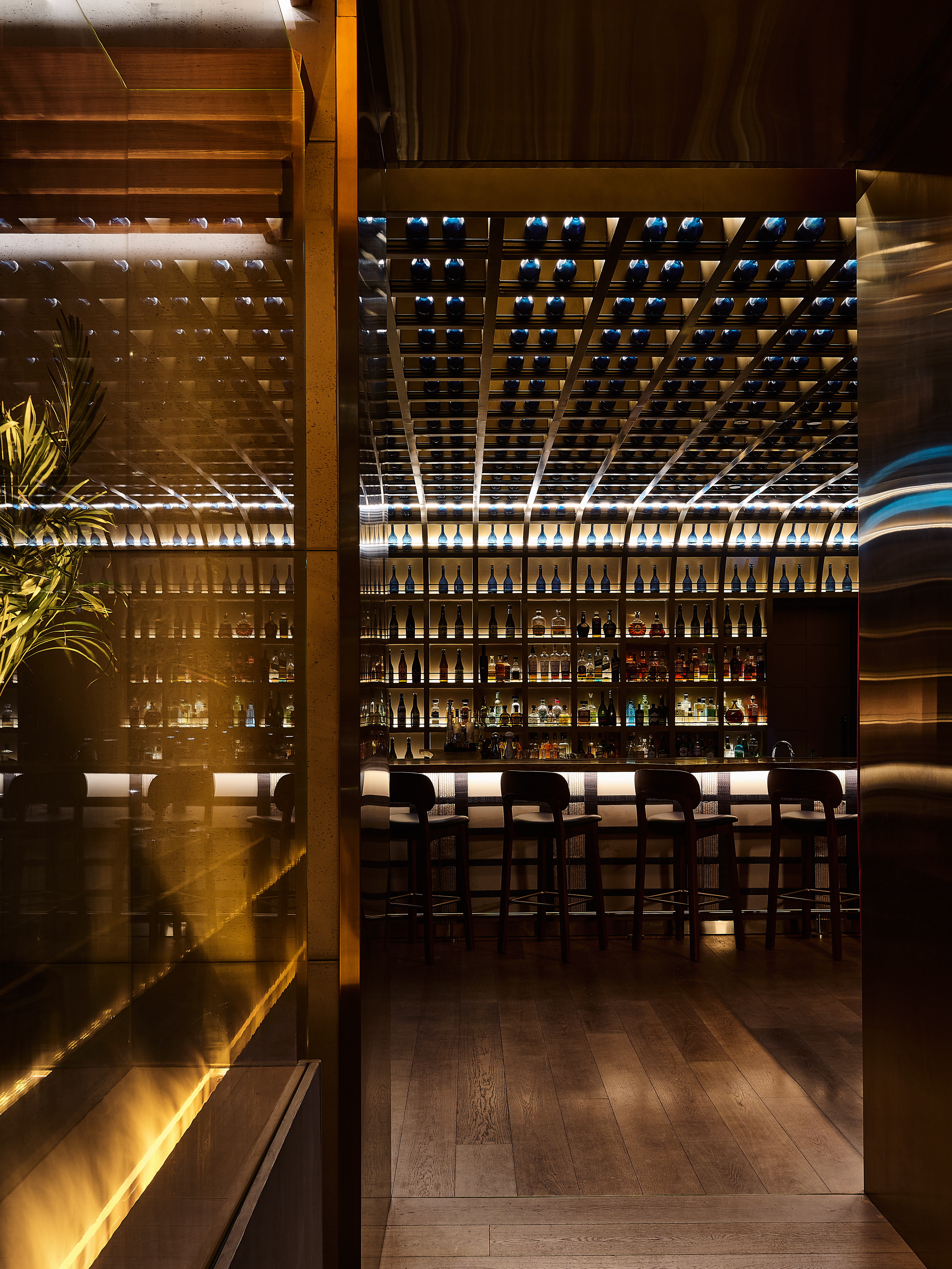
Materiality plays a crucial role in shaping this atmosphere. Deep red velvet curtains evoke the drama of stage drapery, while golden sake niches add moments of glow and ornament within the darker palette. Raw-edge timber and woven jute introduce warmth and tactility, counterbalancing the bar’s polished surfaces and smoky mirrored ceiling with a more grounded, crafted quality.
That contrast between refinement and edge is further sharpened through bespoke graffiti by Enforce One, which brings an urban energy to the interior. Rather than feeling decorative, the artwork acts as a contemporary counterpoint to the more traditional theatrical references, pushing the scheme away from pastiche and towards something more layered and current. The result is a space where luxury is not expressed through excess, but through tension between softness and grit, glow and shadow, performance and intimacy.


