


On a street corner in Wuhans Optics Valley, ENJOYDESIGN and Bluemoon Design spent a year doing something odd: making commerce invisible.
This is practically heretical in Optics Valley. The district thrives on tech campuses and office towers where efficiency reigns. You know where youre going, what youre doing, and you get it done quickly. But these two firms went the opposite direction. Theyve softened every commercial edge, letting something harder to pin down take over: the texture of an ordinary day.

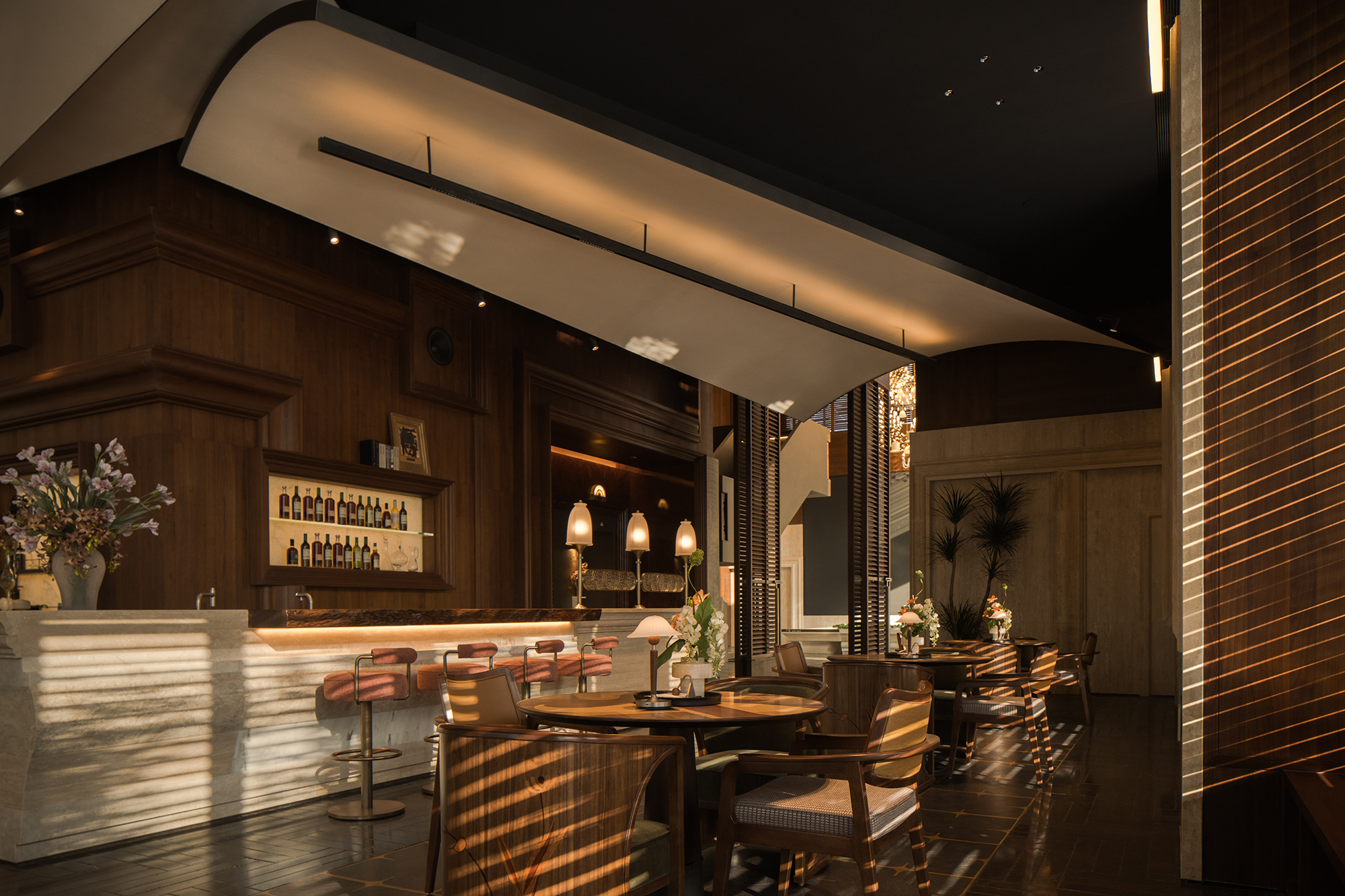
Walk in and theres no signage shouting at you, no promotional displays. Instead, ENJOYDESIGNs “day tea, night bar” greets you first. Mornings and afternoons, its all wood surfaces and warm light. People nurse tea, talk. Come evening, the same room shifts into a bar. The stone-patchwork counters catch the glow from vintage pendants, and suddenly it feels like somewhere youd linger after work. This duality is ENJOYDESIGNs signature move: spaces that adapt to how people actually live, not how retail logic says they should behave.

Keep walking and youll notice nothing has hard edges here. The dining area rejects the usual table-flipping efficiency for deep booth seating that practically begs you to stay. Upstairs, the reading lounge uses low-backed furniture so lightweight it almost disappears. You can read alone or drift into conversation without the space forcing a choice. In the record store, vinyl lines dark wooden shelves, but its the contemporary sound system at centre that anchors everything. Music bleeds from the listening area back to the tea-bar zone, creating this loose acoustic thread between spaces.


The camping gear shop and lifestyle store push this further. No glass vitrines keeping you at arms length. Camping chairs and outdoor tables sit in corners like youre meant to try them out, maybe stay awhile. The lifestyle shop arranges its stock on open wooden shelves with what looks like carelessness but isnt. Natural materials, handmade objects, the kind of things you stumble across rather than hunt down. It doesnt feel like a place with tasks to complete.

This casual atmosphere isnt accidental. ENJOYDESIGN, under founder Guo Jie, thinks about how spaces trigger emotions and social exchanges, how buying something might feel less like a transaction and more like participating in your own life. Bluemoon Design handles the architectural logic, turning these ambitions into workable spatial structures. Together, across 1,000 square metres, theyve built something that doesnt follow the standard playbook for how to get used, how to make people stay, how to keep operating.

The project, completed last October by Optics Valley Traffic Company and China Merchants Shekou Holdings, breaks convention in every detail. Small “commercial boxes” scatter across the site, each with its own character but all bleeding into the surrounding park greenery. Sports and wellness, dining and sociali尸ing, music and culture. Different programmes kept deliberately offset, threaded together by open circulation that avoids the claustrophobic layering of typical shopping centres.


In a place obsessed with speed, ENJOYDESIGN and Bluemoon Design carved out what feels like a slowness gap. They pulled back: warm material textures, light dancing through louvres, circulation routes with breathing room. Its a quiet argument that cities need more than efficient point-to-point trajectories. They need places where you can actually stop, exhale, and connect with something real.


